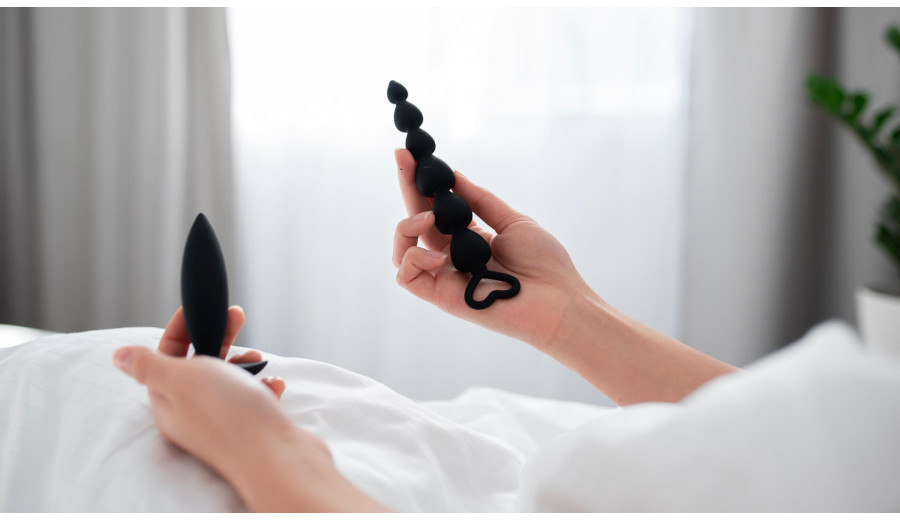
You know how the idea of anal play can feel appealing in theory, then your brain jumps straight to “Is this going to hurt?”

This anal training guide is your practical, partner-friendly way to get comfortable faster, using small steps, plenty of lube, and the right anal sex toys.

You’ll learn how to prep, what to use (and what to avoid), and how to progress without rushing, so anal penetration feels safer, calmer, and genuinely enjoyable.

Key Takeaways

  • Anal training works best in tiny steps: Relaxation first, gentle stretching second, bigger toys only after your body feels ready.
  • Choose safe shapes: For anything going in your anus, use toys with a flared base or a solid handle so you can always retrieve it safely.
  • Lube is non-negotiable: The anus does not self-lubricate, so you need to apply generously and reapply often.
  • Hygiene is about reducing risk, not perfection: Keep hands and toys clean, and avoid sharing toys or douching equipment between partners.
  • Use condoms strategically: Change condoms between anal and vaginal sex, and consider condoms on toys if you’re switching between body areas.

What is anal training?

Anal training teaches your anus to accept fingers, toys, or a penis in small, predictable steps.

You’re working with two muscles, the external sphincter and the internal sphincter. Your goal is not to “force” anything open, it’s to help those muscles relax so penetration feels comfortable.

The rectum has lots of sensitive nerve endings. With the right pace, anal play can feel intensely pleasurable for any partner, whatever your gender or orientation.

In practical terms, “training” looks like short sessions where you repeat the same comfortable step. Over time, your body learns that penetration is safe, and tension drops.

A key point many people miss is that the anus returns to its normal shape between sessions. That’s normal, it’s why consistency matters more than one long session.

Mr Play Powerful Vibrating Anal Plug

Mr Play Powerful Vibrating Anal Plug

Preparing for anal training

Prep is where most people win or lose the experience.

If you focus on relaxation, hygiene, and lube, you usually need less “effort” to get results, and you reduce the chance of soreness after.

Start with breath work and light foreplay to calm the anal sphincter and raise arousal. Then check hygiene, choose a small plug or dilator, and apply a generous amount of lubricant before you begin.

  • Set the scene: Warmth, privacy, and time reduce your body’s urge to clamp down.
  • Do a quick comfort check: Avoid training if you have active hemorrhoids, fissure pain, or unexplained bleeding.
  • Pick your “starter size”: Aim for something smaller than you think you need, you can always size up later.
  • Plan your exit: Keep tissues, water, and a towel nearby so you never feel rushed.
Ouch Intimate Douche

Ouch Intimate Douche

How can relaxation and arousal help with anal training?

Relaxation is not a mood thing, it’s muscle physiology. When you’re tense, your sphincters tighten and penetration feels sharper.

Deep breathing and slow foreplay help those muscles soften. One NHS pelvic floor leaflet explains the anal sphincter is part of the pelvic floor muscle system, and learning to relax it is a real skill, not a personality trait.

Try one position that makes it easy to stay in control. Lying on your side with knees drawn up often works well, because your hips and belly stay relaxed.

  • Breathe low and slow: Inhale through your nose, let your belly rise, exhale longer than you inhale.
  • Use arousal on purpose: Masturbation or a vibrator on the outside can reduce discomfort by keeping your body in “pleasure mode”.
  • Warm up the area: Lots of external touch first, then one well-lubricated finger, then a small toy.
  • Keep the pace predictable: Slow insertion, pause, then tiny movements, so your body can adapt.

If you like product-specific guidance, many beginners in the UK start with thicker water-based lubes such as Sliquid’s Sassy for anal play, because it gives more cushion while you’re learning what “comfortable pressure” feels like.

For toy ideas, you’ll see beginner lists on pages like Forthecloset. Treat those lists as inspiration, then choose based on shape, material, and a flared base.

The Tower Erection Enhancer

The Tower Erection Enhancer

What are the best cleaning and hygiene practices before anal training?

Cleanliness reduces infection risk, but it should never become an aggressive routine that irritates delicate tissue.

In UK sexual health advice, anal sex is treated as higher-risk for sexually transmitted infections than many other activities, so your hygiene plan should focus on reducing friction and cross-contamination (not chasing “sterile”).

  • Start simple: A bowel movement earlier in the day, then a warm shower and gentle wash around the anus is enough for many people.
  • If you douche, keep it gentle: Use lukewarm water only, stop if you feel stinging, and give yourself time for any water to drain out before sex.
  • Do not share equipment: Avoid sharing toys, condoms, or douching equipment between partners, and don’t switch them between body areas without cleaning and fresh barriers.
  • Hands matter: Trim nails short, smooth sharp edges, and consider disposable gloves or finger cots for finger play to reduce microtears.
  • Wash toys properly: Warm water and mild soap works for many non-porous toys, then dry fully before storage.
  • Barrier strategy: Use condoms on toys if you’re switching between anal and vaginal play, or if a toy is porous and you can’t fully sanitise it.
Dark Stallions Ass Cork 4 Inch Silicone Butt Plug

Dark Stallions Ass Cork 4 Inch Silicone Butt Plug

Choosing the right tools

Your tools should make training easier, not more dramatic.

As a rule, start with smooth, tapered shapes in body-safe materials, and build up slowly. Many beginner guides from established UK retailers also stress the same safety baseline: a tapered tip for easier insertion and a flared base for retrieval.

For shopping in the UK, look for clear material descriptions like medical-grade silicone, borosilicate glass, or stainless steel, and avoid bargain toys that don’t state what they’re made from.

Quick buying filter: If a listing won’t tell you the material, the size, and the base shape, skip it and buy from a more transparent adult shop UK retailer.

  • Silicone: Soft, flexible, great for beginners, and easier to clean than many porous materials.
  • Glass or stainless steel: Smooth, firm, and easy to sanitise, best once you already understand your comfort range.
  • Avoid porous “mystery” materials: They can hold odour and bacteria, and they’re harder to clean reliably.

What anal training toys and materials are recommended?

Start with toys that match your current comfort. Your first goal is confidence and control, not size.

If you’re browsing anal sex toys in a sex shop UK or an adult store online, prioritise these features: a tapered tip, a smooth surface, and a flared base or handle.

Tool Why How to use Safety notes
Anal dilators (graduated sizes) They give you a clear, step-by-step path. That predictability helps your body relax. Start with the smallest size. Insert slowly, pause to breathe, remove, then repeat once it feels easy. Choose non-porous materials and a strong base/handle. Stop if you feel sharp pain.
Anal trainer kits, graduated plugs They make “progress” measurable without guessing, which reduces rushing. Stay on one size until insertion and removal feel calm across several sessions. Keep each plug clean and dry, store separately so lint and bacteria do not transfer.
Butt plug with flared base A flared base prevents the toy from slipping fully inside, and makes removal safer. Insert slowly and wear for short, comfortable periods. Build time gradually. Never use anything without a flared base internally. If you feel numb, stop and reassess.
Finger cots or disposable gloves They reduce micro-scratches from nails, and make cleanup easier. Use a fresh one, add lube, start with external touch, then one finger. Do not reuse. Change gloves if you switch between anal and vaginal touch.
Glass plugs (for stepping up) Very smooth and firm, which can feel easier once you already tolerate smaller sizes. Warm it in your hands, use plenty of lube, insert slowly with full control. Only choose reinforced, body-safe glass with a wide base. Do not use if chipped or cracked.
Anal beads and prostate massagers They can add variety by stimulating different nerve endings once you feel comfortable. Use beads for gradual insertion and removal, and start on the lowest settings for massagers. Pick toys with retrieval handles. Clean thoroughly after each use.
Depth training dildos (intermediate) They help you explore deeper penetration after you’ve built a comfortable “base size”. Use clear limits, slow pace, and plenty of lube, especially at the start. Avoid force, and do not “push through” pain. Depth play should never feel sharp.
Lubricant and cleaning supplies These are your essentials, not extras. They prevent friction injuries and keep toys hygienic. Apply lube generously and reapply often. Clean toys before and after use. Avoid oil-based products with latex condoms. Follow the toy maker’s cleaning guidance.

If you like deeper reading, you’ll see practical pacing tips on Bad Girls Bible and beginner breakdowns. Use them to sense-check your approach, then stick to what your body actually tolerates.

ID Millennium 17 oz Pump

ID Millennium 17 oz Pump

Which lubrication options improve comfort during anal training?

Lubrication is essential for anal sex because the anus does not self-lubricate.

For condom users in the UK, brands like Durex explicitly warn that oil-based products can damage latex condoms, so choose water-based or silicone-based products based on your toy material and barrier plan.

Lubricant Type Why use it Key guidance and cautions
Water-based lubricant – Gentle on skin and condoms.

– Compatible with silicone anal sex toys and other materials.

– Easy to wash off with water.

– A great default choice for silicone toys.

– Reapply as needed during sessions to maintain comfort.

– Avoid numbing agents, you need clear pain signals to prevent tears or anal fissures.

Silicone-based lubricant – Long lasting, so you reapply less often.

– Smooth glide can help with gradual anal dilation.

– Avoid using it with silicone toys unless the toy maker says it is compatible, because it can degrade some silicone surfaces.

– Usually fine with latex condoms, but still check the label.

– Skip anaesthetic versions, do not mask pain.

Oil-based lubricant – Thick and slick, some people like the texture. – Do not use with latex condoms or latex gloves, oil can weaken latex.

– Harder to clean, and can increase hygiene workload.

– Generally not a first-choice option for anal training.

Numbing or desensitising lubes – May reduce perceived discomfort. – Avoid these for training. If you cannot feel pain, you can go too far and cause injury.

– Safer progress comes from better foreplay, more lube, and smaller steps.

Application tips – Use ample lubricant, the anus does not self-lubricate.

– Apply to the toy and the outside of the anus.

– Reapply frequently during longer sessions.

– Match lubricant to your toy material and condom use.

– Prioritise tissue comfort over “pushing through”.

How your partner can support you

Your partner’s real job is to help your body feel safe.

That means patience, consent, and consistent communication, plus practical support like warming lube in their hands and handing you a smaller toy when you need to step back.

  • Lead with foreplay: Aim for full arousal before any insertion, it changes how your anal sphincter responds.
  • Keep the pace yours: You guide depth and speed, your partner follows your cues.
  • Use praise and calm feedback: It reduces performance pressure and keeps your nervous system settled.
  • Make re-lubing routine: Treat it like breathing, not like a setback.

How to ensure open communication and consent during anal training?

Agree boundaries before you start. Decide what you’ll try today, what is off-limits, and what “stop” looks like.

A simple system that works well for couples is “green, amber, red”. Green means keep going, amber means slow down or stay still, red means stop and remove the toy.

For safer sex, an NHS sexual health service advises changing condoms between anal and vaginal sex to avoid transferring germs between body parts.

  • Choose a stop signal: A word, a hand squeeze, or tapping your partner’s arm.
  • Check in often: Ask “pressure or pain?”, not “are you ok?”. It gives you clearer information.
  • Change barriers when switching: New condom for a new body area, and a fresh condom on toys if you move from anus to vagina.
  • Keep it shame-free: If something pinches, you pause, add lube, or size down. That is still progress.

Why is it important to start slowly and build trust with your partner?

Going slowly protects your tissue and your confidence.

If you rush, you can trigger pain, muscle clenching, and small tears. Those experiences make the next session harder because your body learns to brace.

Trust makes relaxation easier. In my experience, the most overlooked step is letting one “easy” session be enough, instead of treating every session as a test you must pass.

  • Start smaller than a penis: Fingers, a slim butt plug, or the smallest anal dilator is usually the best first step.
  • Hold, don’t thrust: Early training is about your body learning to accommodate, not about friction.
  • Stop on sharp pain: Sharp, burning, or tearing sensations are a “no” signal, not a “push through” moment.

Progressing gradually

Progress comes from repeating what feels good, then nudging one variable at a time.

Think of it like strength training for comfort: you build tolerance with small, consistent sessions, not by maxing out once.

If you keep a simple log in your notes app, it becomes easier to spot patterns, like which foreplay helps most, or which lube works best with your silicone toys.

What you change Safe “small step” example What “ready” feels like
Size Move up to the next plug in a training kit Insertion feels like pressure, not pain, and removal is calm
Time Wear a small butt plug briefly during foreplay You can relax your pelvic floor while it’s in
Movement Tiny, slow motions rather than thrusting No stinging, no clenching, no “bracing” reflex
Depth Shallow depth play with clear limits You can breathe steadily and stay aroused

How do you safely increase toy size over time?

Start small and stay patient. Use plenty of lubricant to ease every step.

  • Begin with fingers or a small, smooth plug with a flared base. Insert slowly, pause, then stop if you feel sharp pain or strong resistance.
  • Use an anal trainer kit with graduated sizes. Progress only after several sessions feel comfortable at your current size.
  • Warm up first. Do a few minutes with the smaller size, then try the next size while you’re already relaxed and well-lubricated.
  • Keep insertion slow and predictable. If you feel your anal sphincter clench, stop moving, breathe, then decide whether to continue or remove.
  • Match lube to your kit. Water-based lube is the safest default for silicone anal sex toys, and you can reapply freely.
  • Ask your partner to support you with steady hands and check-ins, not extra force.
Cheeky Butt Plug Duo Pink

Cheeky Butt Plug Duo Pink

How can you listen to your body’s limits during anal training?

Your body is very clear once you know what to listen for.

Stop if you feel sharp pain, burning, tearing sensations, numbness, or if you see blood. Those are signs you need to pause, size down, add more foreplay and lube, or take a longer break.

  • Normal sensations: pressure, fullness, mild stretching that eases as you breathe.
  • Not-to-ignore sensations: sharp pain, persistent soreness that lasts into the next day, or bleeding.
  • Adjust your plan: smaller toy, more lube, slower pace, and less depth.
  • Know when to get help: if bleeding repeats, pain persists, or you suspect fissures or haemorrhoids, speak to a GP or a sexual health clinic before you resume.

Conclusion

Anal training gets easier when you treat it as a calm, repeatable process.

Your partner can help by keeping the pace slow, consent clear, and foreplay generous.

Use plenty of lubricant, start with fingers, then a small flared-base butt plug or anal dilators, and build up only when your body says yes.

Rest if you feel sore, and stop for sharp pain or bleeding.

FAQs

1. What is an anal training guide, and how can my partner help me get comfortable faster?

An anal training guide gives clear, step-by-step advice to build comfort and control. Your partner can help with calm support, careful pacing, good hygiene, clear communication and regular feedback.

2. What tools and lubricant should we use during anal training?

Choose a body-safe lubricant and a small, smooth device, and clean items before and after use. Pick products made for anal use and test them on skin first.

3. How should we pace sessions so I make steady progress?

Do short, regular sessions rather than long, rare ones; small gains add up. Stop if you feel pain, and let your partner adjust the pace in response to your cues. Myth: force speeds progress, that is false.

4. Do we need consent and safety checks during anal training?

Yes, firm consent matters at every step. Agree a safe word, watch for discomfort, and keep focus on relaxation and steady breathing.